Water damage guide
How to Get Rid of Mold After Water Damage in Scottsdale
To get rid of mold after water damage, you have to fix the moisture first, then clean or remove what the mold grew on. Scrubbing a wall does nothing lasting if the leak behind it is still feeding the colony. The EPA's approach is simple: correct the water problem, clean hard surfaces with detergent and water, and throw out porous materials that stayed wet. This guide walks through how to get rid of mold on walls and other surfaces, what actually kills it, whether black mold is something to worry about, and when a small job has turned into one for a professional. For the bigger picture, see whether water damage can be repaired in the first place.
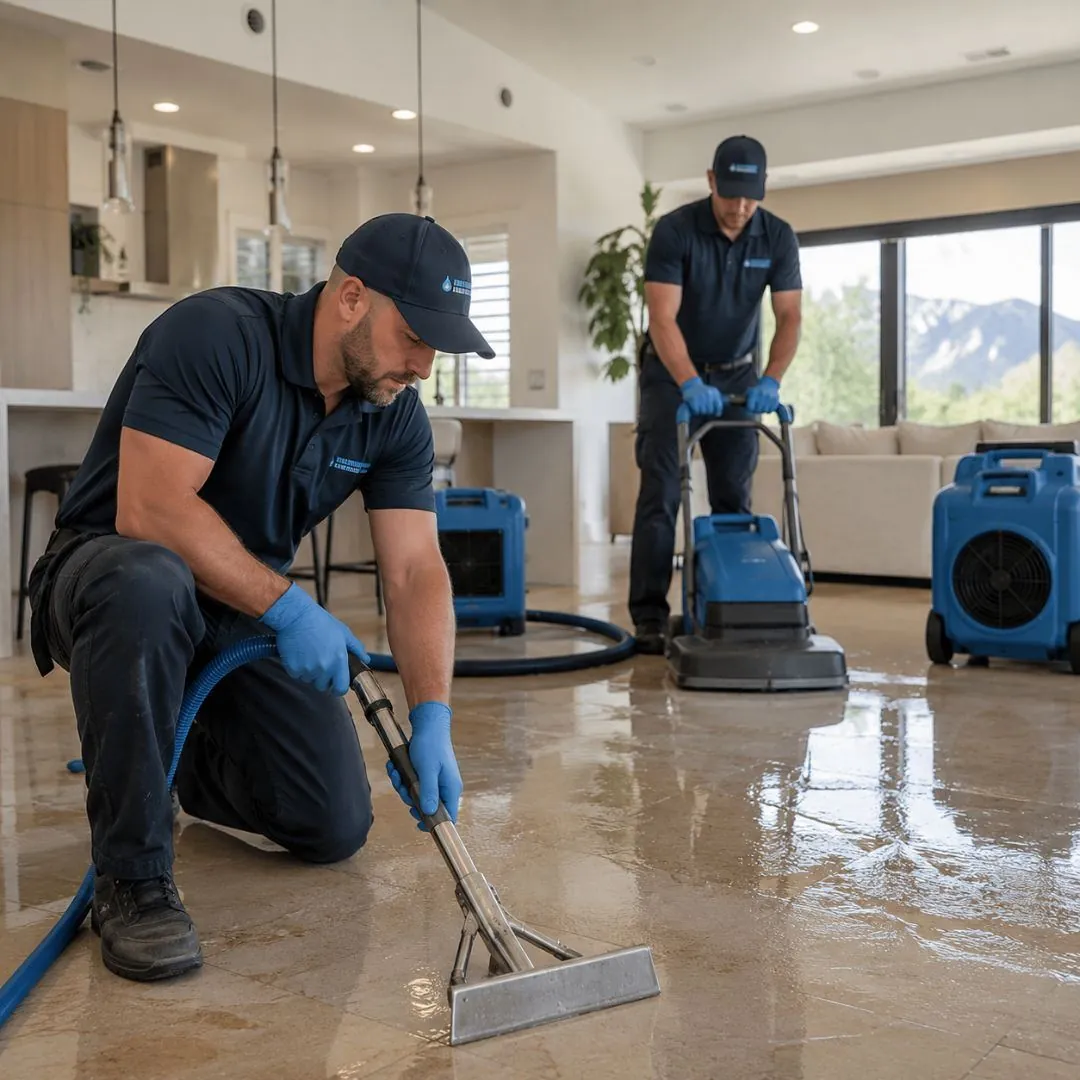
From our experience in Scottsdale: Scottsdale's dry climate can be misleading after water damage, because the surface of a wall may feel dry while moisture remains trapped behind drywall, baseboards, or insulation. That hidden moisture can support mold growth out of sight, which is why simply bleaching or painting over a visible spot may leave the real problem untouched.
How do you get rid of mold on walls?
Fix the moisture source first, then clean the mold off hard surfaces and remove anything porous that stayed wet. The EPA's guidance is to scrub mold off hard surfaces with detergent and water and dry them completely. Painted drywall, tile, and sealed wood can usually be cleaned this way, as long as the wall behind them is actually dry.
Porous materials are the exception. Soaked drywall, carpet and pad, ceiling tiles, and insulation that grew mold are removed rather than cleaned, because mold roots into them and will not fully wash out. When it is hidden inside a wall, see our guide on mold behind drywall. On a wall, that often means cutting out the affected section of drywall, drying the cavity behind it, and patching once a moisture reading confirms it is dry. Getting that drying right is the core of proper structural drying, and it is what keeps the mold from simply returning.
| Material | Clean or remove? |
|---|---|
| Painted drywall (surface mold, dry behind) | Clean with detergent and water |
| Tile, glass, sealed wood, metal | Clean with detergent and water |
| Soaked or crumbling drywall | Remove and replace |
| Carpet and carpet pad | Remove if it grew mold |
| Insulation | Remove and replace |
| Ceiling tiles | Remove and replace |
What kills mold, and what should you not use on it?
Detergent and water is the EPA's recommended way to clean mold off hard surfaces, and drying the surface completely afterward is what keeps it from returning. What the EPA specifically does not recommend is routinely using bleach or other biocides to kill household mold. Bleach mostly lightens the stain on the surface while the moisture problem, the actual cause, stays put.
The one thing never to do is paint over it. The EPA warns that paint applied over a moldy surface is likely to peel, so painting just hides a problem that keeps growing underneath. Fix the water source, remove or clean the mold, dry everything out, and only then repaint.
How is black mold different, and is it dangerous?
Practically speaking, black mold is removed the same way as any other mold, and you do not need to identify the species first. The CDC's position is that the color of mold does not reliably indicate how dangerous it is, and that testing is generally unnecessary because any indoor mold should be removed regardless of type. Spending money to find out exactly what color or species you have is money better spent on drying and removal.
On health, the honest answer is measured rather than alarming. The CDC notes that mold exposure can cause stuffy nose, coughing or wheezing, and eye or skin irritation, and that people with asthma, mold allergies, or weakened immune systems can react more strongly. That is a real reason to remove mold promptly, but it is not a reason to panic over the color of a stain. Not all mold is dark, either, and our guide on white mold covers the light-colored kind.
When should you call a professional?
The EPA's rule of thumb is size: you can usually clean a moldy area smaller than about 10 square feet, roughly a three-by-three-foot patch, yourself. Beyond that, or if mold has reached the HVAC system, or if it followed significant water damage, it is a job for a professional with containment and the equipment to dry what is behind the walls.
Two other cases tip it toward a pro: when the moisture source is hidden and you cannot find where the water is coming from, and when someone in the home has asthma or another health sensitivity. In those situations, fast water damage cleanup and full water damage restoration remove the mold and the moisture together, which is the only way it stays gone.
How do you stop mold from coming back?
Mold comes back for one reason: the moisture behind it was never fully dried. The way to prevent it is to fix leaks quickly, dry water-damaged materials within the first 24 to 48 hours, and keep indoor humidity below 60 percent. Dry the structure inside that window and, in most cases, mold never gets established in the first place.
This is where the Arizona climate trips people up. A wall can feel dry to the touch while the framing, insulation, or slab behind it is still holding water, and that hidden moisture is exactly what feeds a return. Fast water mitigation and verified drying, not a fresh coat of paint, are what actually keep it away. If mold appeared on a ceiling, our guide to ceiling water damage covers that specific case.
Does insurance pay for mold removal?
Sometimes. Mold is generally covered only when it grew out of a covered water event, like a sudden pipe burst, and many policies cap how much they pay for mold remediation. Mold that traces back to a slow leak or deferred maintenance is usually excluded, because the underlying cause was not a sudden accident.
That is another reason to dry things fast: the quicker the water is handled, the less likely mold is to become its own problem the insurer can question. Our guide to whether homeowners insurance covers water damage breaks down how mold, roof leaks, and flooding are treated, and you can always request an estimate for a documented starting point.
Mold removal FAQs
How do you get rid of mold on walls?
Fix the moisture source first, then scrub mold off hard surfaces with detergent and water and dry them completely. Porous materials like soaked drywall, carpet, and insulation that grew mold are removed rather than cleaned, because mold roots into them and will not fully wash out.
What kills mold, and what should you not use on it?
The EPA recommends scrubbing hard surfaces with detergent and water, and it does not recommend routinely using bleach or other biocides. Never paint over mold, since paint on a moldy surface tends to peel and only hides the problem while it keeps growing.
Is black mold dangerous?
The color of mold does not reliably indicate how dangerous it is, according to the CDC, and you do not need to identify the species before removing it. Mold can cause allergy-type symptoms, and people with asthma or weakened immune systems tend to react more strongly.
When should you call a professional?
Handle only small areas under about 10 square feet yourself, and call a professional for anything larger, for mold in the HVAC system, or after significant water damage. A pro is also worth it when the moisture source is hidden or someone in the home has health sensitivities.
How do you stop mold from coming back?
Fix leaks quickly, dry water-damaged materials within 24 to 48 hours, and keep indoor humidity below 60 percent. In a dry climate a surface can feel dry while moisture stays trapped in the wall, so verified drying matters more than how the surface looks.
Mold after water damage in Scottsdale?
Removing mold without drying what is behind the wall just invites it back. We handle the moisture and the mold together. Reach out for a fast response and a clear plan.