Water damage guide
Can Water Damage Be Repaired in Scottsdale?
Yes. In most cases water damage can be repaired, and how much of your home can be saved comes down to one thing: how quickly the water is found and dried. When water damage repair in Scottsdale starts within the first day or two, drywall, flooring, and framing can often be dried and restored rather than torn out. Wait too long and repair turns into replacement, as materials warp, swell, and grow mold. This guide covers what can realistically be saved, how the repair process works, how fast mold sets in, what it tends to cost, and how insurance fits in.
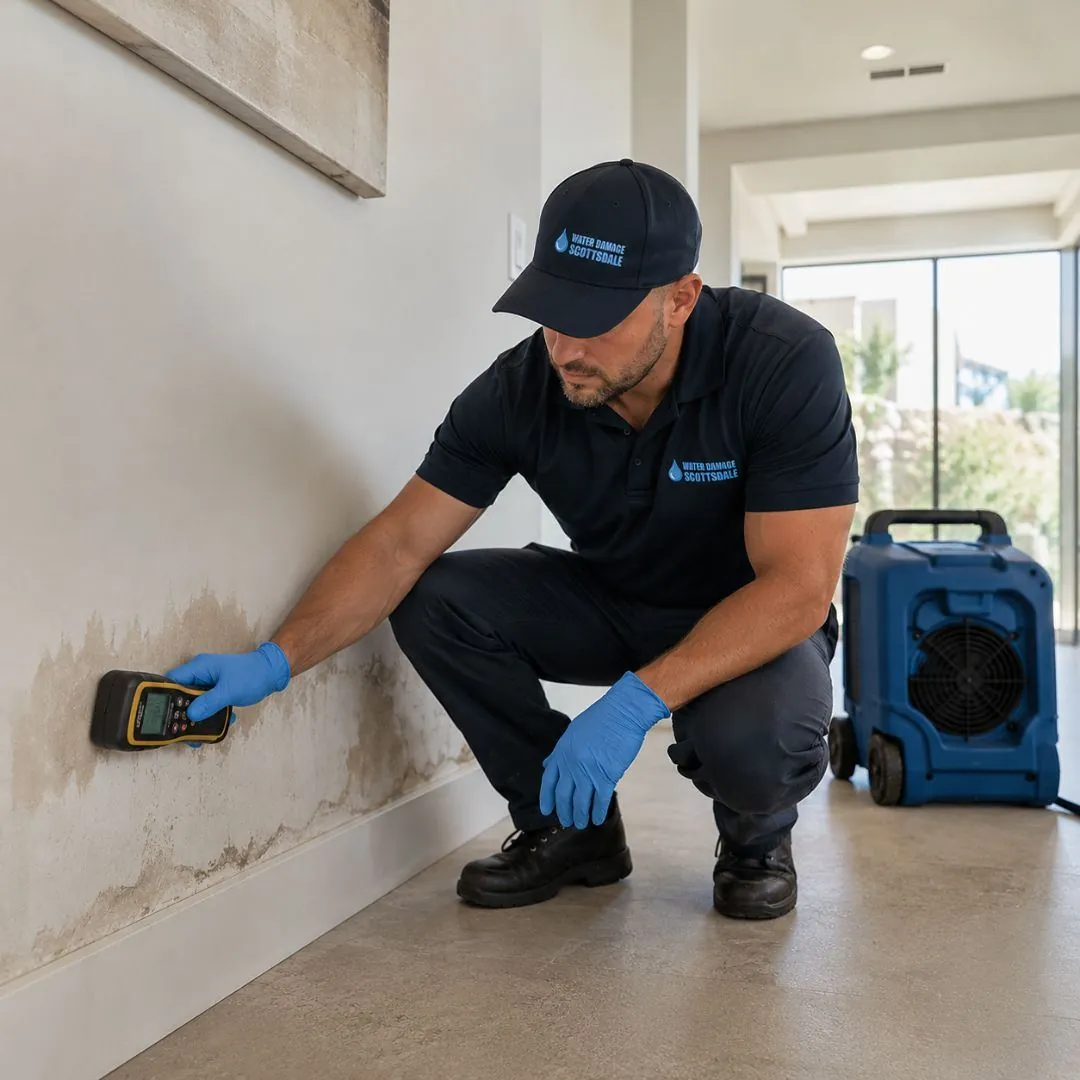
From our experience in Scottsdale: one of the biggest mistakes homeowners make is assuming the dry Arizona climate will take care of water damage on its own. It won't. Moisture stays trapped behind walls, under flooring, and inside cabinets, and if it isn't properly dried it turns into mold, lingering odors, and far more expensive repairs down the line.
What water damage can be repaired, and what has to be replaced?
Most structural materials can be saved if they are dried quickly and were not soaked by contaminated water. The dividing line is usually how long a material stayed wet and what category of water reached it, not the material itself. Drywall is a good example: the EPA notes it can be dried in place when there is no swelling and the seams are intact, but once it swells or sits in dirty water it has to come out.
| Material | Often repairable | Usually replaced |
|---|---|---|
| Drywall and ceilings | Minor staining, dried within about 48 hours | Sagging, crumbling, or sewage-soaked |
| Hardwood flooring | Surface cupping caught early | Long-saturated or buckled boards |
| Carpet | Clean-water soaked and dried fast | The pad, or anything hit by contaminated water |
| Cabinets and trim | Solid wood, dried promptly | Particleboard that has swelled |
| Insulation | Rarely worth saving once wet | Usually removed and replaced |
| Framing and studs | Almost always, dried in place | Only if rot has already set in |
Water-damaged ceilings are one of the most common repairs we see, because an upstairs leak or roof intrusion often shows up first as a stain on the ceiling below. Whether it can be patched or has to be opened up depends entirely on how saturated it is by the time drying starts, which is why fast structural drying protects more of your home than any repair technique.
How quickly do you need to act after water damage?
You have roughly 24 to 48 hours before wet materials start to grow mold, and that window is what decides repair versus replacement. The EPA advises drying water-damaged areas and items within 24 to 48 hours to prevent mold from taking hold.
The hard part is that water rarely stays where you can see it. It wicks into baseboards, travels under flooring, and collects inside wall cavities, so a spot that looks dry on the surface can still be soaking the structure behind it. Running the air conditioning helps, since the EPA recommends keeping indoor humidity below 60 percent to slow mold growth. That is why fast water mitigation matters so much, and why a hidden source like a burst pipe can cause far more damage than the visible puddle suggests.
How fast does mold grow after water damage, and what actually kills it?
Mold can begin growing within 24 to 48 hours on materials that stay wet, which is why the drying deadline and the mold deadline are really the same deadline. The real fix is removing the moisture, not spraying the surface: dry the structure inside that window and, in most cases, mold never gets established in the first place.
For the small patch of surface mold a homeowner might tackle, the EPA's advice is to scrub hard surfaces with detergent and water and dry them completely, and it specifically does not recommend using bleach or other biocides to routinely kill household mold. The one thing never to do is paint over it. The EPA warns that paint applied over a moldy surface is likely to peel, so painting just hides the problem while it keeps growing underneath. Fix the water source first, remove the mold, dry it out, and only then repaint.
Can you still live in a house with mold?
Often yes, if it is small and contained, but it depends on how much there is and who lives there. The EPA's rule of thumb is size: an area under about 10 square feet, roughly a three-by-three-foot patch, is usually something a homeowner can handle, while anything larger, or any cleanup following major water damage, is work for a professional. Mold can cause allergy-type reactions such as congestion, coughing, and eye or throat irritation, and people with asthma or weakened immune systems tend to react more strongly.
One myth worth clearing up: the color of the mold does not reliably tell you how dangerous it is. "Black mold" gets the headlines, but the safe approach is to treat any sizeable indoor growth the same way regardless of color, find the moisture, fix it, and remove the growth rather than spending money on testing to identify the exact species. If it is hidden in a wall, our guide on mold behind drywall covers the signs and removal. Our full guide on how to get rid of mold after water damage covers the cleanup step by step.
What does the water damage repair process look like?
Repair follows drying: the property is inspected, water is extracted, the structure is dried and verified, and only then are damaged materials repaired or replaced. Skipping straight to cosmetic repairs is the most common mistake, because moisture trapped behind a fresh coat of paint keeps causing damage.
A typical job moves from inspection and moisture mapping, through cleanup and extraction, into a monitored drying phase, and finishes with repairs to the materials the water affected. The full arc is what we cover under water damage restoration, and the repair stage is only as good as the drying that came before it. Reputable providers confirm the structure is dry with moisture readings rather than assuming it is dry because it feels that way.
How much does water damage repair cost in Scottsdale?
Most water damage repair projects in Scottsdale run from a few hundred dollars for a small, quickly-dried area to $20,000 or more for a large, multi-room loss. The final figure depends on how far the water spread, the materials involved, how long drying takes, and whether mold or contaminated water is present. For a sense of scale, the Insurance Information Institute puts the average water-damage-and-freezing insurance claim at about $13,954, the second most common homeowners claim after wind and hail.
Because the range is so wide, an on-site inspection is the only way to get a real number. For a full breakdown, see our guide on water damage restoration cost. The sooner an assessment happens, the smaller the job usually stays, since early drying keeps a minor repair from becoming a major rebuild. You can request an estimate to get started.
Does insurance cover water damage repair?
Most homeowners policies cover water damage repair when the cause is sudden and accidental, such as a burst pipe or an overflowing appliance. They generally exclude gradual leaks and neglected maintenance. Our guide to whether homeowners insurance covers water damage breaks down mold, roof leaks, and how to file a claim. Flooding is the important exception in Arizona: FEMA notes most homeowners policies do not cover flood damage, which takes a separate flood policy, and there is usually a 30-day waiting period before that coverage starts, so it cannot be bought once a monsoon storm is already in the forecast.
Because policies differ, it is worth checking your own coverage before assuming a claim will or will not be paid. It also helps to know that the Insurance Information Institute's claim category for water damage and freezing includes mold when the underlying event was covered. Good documentation helps either way, so a restoration provider should record moisture readings, photos, and the work performed to support your claim. Insurance decisions are ultimately between you and your carrier.
What makes water damage repair different in Scottsdale?
Scottsdale's dry climate, monsoon storms, slab-on-grade construction, and hard water each change how water damage shows up and how it is repaired. A leak that would be obvious in a humid climate can hide for weeks here while still soaking framing and drywall behind the scenes.
Monsoon season drives wind-blown rain against roofs and pushes runoff toward lower entries, so storm intrusion is a real seasonal cause. In older parts of central and south Scottsdale, slab leaks can travel along the foundation and surface as warm or damp flooring a good distance from the actual break, which makes leak detection important before any repair begins. We handle these situations across the Scottsdale neighborhoods we serve, from Old Town condos to North Scottsdale estates.
Water damage repair FAQs
Can water-damaged drywall be repaired, or does it need replacing?
It depends on how wet it got and for how long. Drywall with minor staining that is dried within a day or two can often be sealed and repainted, while drywall that is sagging, crumbling, or was soaked by contaminated water is usually cut out and replaced.
How quickly does mold grow after water damage?
Mold can begin to grow within 24 to 48 hours on materials that stay wet, according to the EPA. Drying the structure completely inside that window is the most reliable way to keep it from ever getting started.
What should you never spray on mold?
The EPA does not recommend routinely using bleach or other biocides to kill household mold, and you should never paint over it, since paint on a moldy surface tends to peel and simply hides the problem. Scrub hard surfaces with detergent and water, dry completely, and fix the moisture source behind it.
Is water damage permanent if it dries on its own?
Water that dries on its own without proper equipment often leaves hidden moisture behind in framing, subfloor, and wall cavities. That trapped moisture can lead to warping, odor, and mold weeks later, which is why verified drying matters more than a surface that simply feels dry.
Should I repair water damage myself or call a professional?
A small, clean spill you catch immediately can often be dried with towels and a fan. Larger or hidden water travels into places a household fan cannot reach, so a professional with moisture meters and commercial drying equipment gives you the best chance of repairing rather than replacing.
Dealing with water damage in Scottsdale?
The sooner drying starts, the more of your home can be repaired instead of replaced. Reach out for a fast response and a clear plan.