Water damage guide
Water Damaged Hardwood Floors in Scottsdale: Can They Be Saved?
Water damaged hardwood floors can often be saved, but only if you stop the water fast and dry them the right way. Wood is hygroscopic, meaning it takes on and releases moisture from its surroundings, so a wet floor swells, cups, and can distort, and the wrong response tends to make it worse. The single most expensive mistake is refinishing too soon, before the moisture underneath has cleared. This guide covers whether your floor can be saved, the signs to read, how long you have, when a floor can be dried and when it has to be replaced, and how insurance fits in.
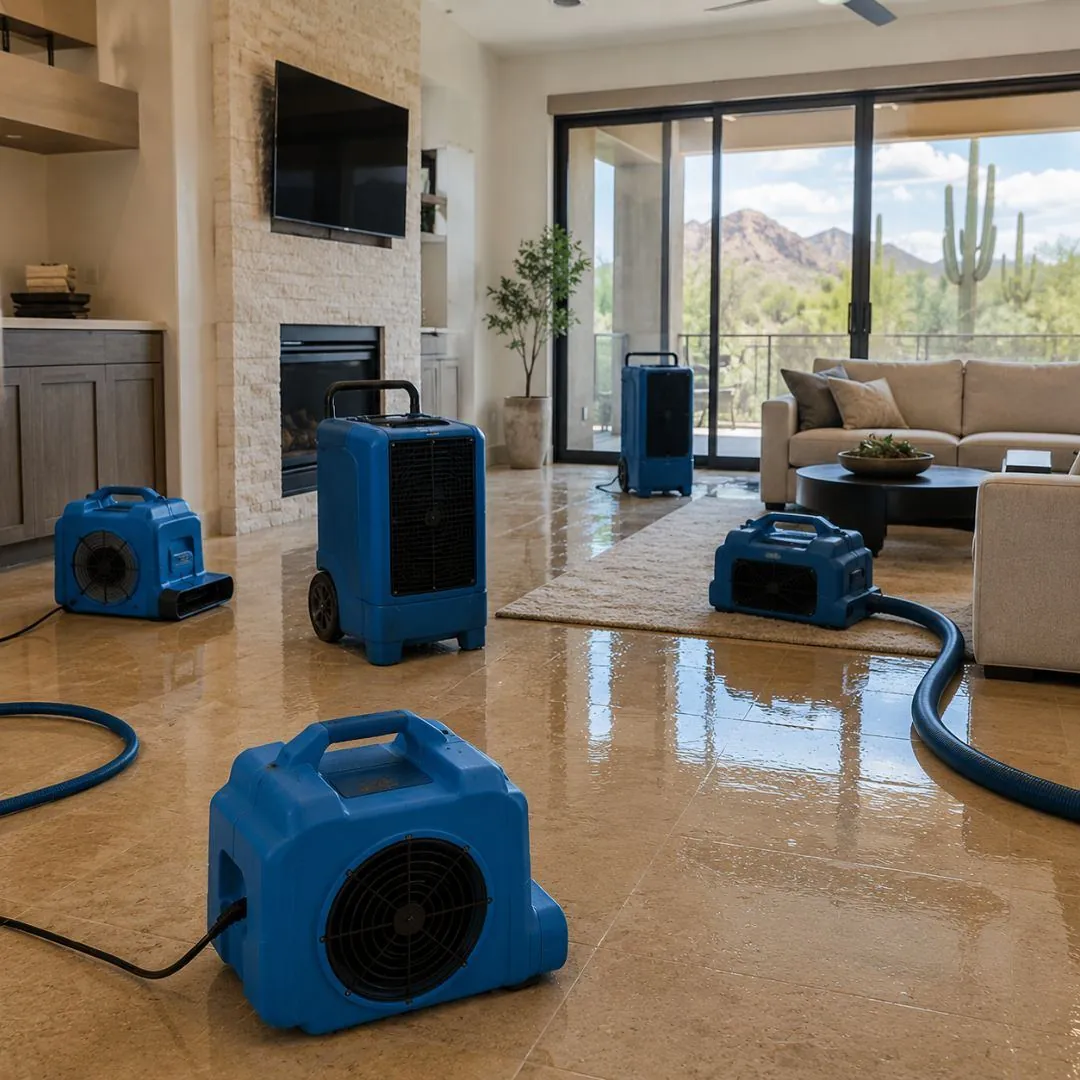
From our experience in Scottsdale: the dry desert air can make the top of a hardwood floor look and feel dry before moisture trapped underneath has actually cleared. One of the biggest mistakes is sanding or refinishing too soon, because the wood may still be cupped or holding moisture below the surface, and can distort again after the repair.
What does water damage to a hardwood floor look like?
Wood reacts to trapped moisture by changing shape, so the damage usually shows up as a distortion in the boards before anything else. Reading which distortion you have is the first step, because it points to how wet the floor is and whether it can be dried or has to be replaced.
| What you see | What it usually means |
|---|---|
| Cupping (edges higher than the center) | Moisture underneath the boards, often dryable if caught early |
| Crowning (center higher than the edges) | Often from sanding a cupped floor before it dried |
| Buckling (boards lifting off the subfloor) | Severe saturation, usually means replacement |
| Dark stains or discoloration | Water sitting long enough to reach the wood or subfloor |
| Gaps or separation between boards | Wood that swelled and then shrank as it dried unevenly |
| Soft or spongy spots | Possible subfloor damage below, needs inspection |
A limited pattern of cupping near a wall, an appliance, or a doorway often points to a specific source like a leak or an overflow, while widespread cupping suggests a larger water event or high moisture across the whole room.
How long do you have before the damage is permanent?
The first 24 to 48 hours decide most of it. Mold can begin to grow on wet materials within 24 to 48 hours according to the EPA, and every extra day the boards and subfloor stay saturated pushes the floor closer to replacement rather than drying.
Wood does not dry on a schedule that suits you, though. Even under proper equipment, moisture moves out of hardwood slowly, so drying a wet floor can take weeks, not days. That is the tension with hardwood: you have to start fast, then be patient, and rushing the finish is what ruins otherwise savable floors.
Can cupped hardwood floors be repaired without replacing them?
Often, yes. Once the moisture source is removed and the floor is dried slowly and fully, mild to moderate cupping frequently relaxes back toward flat on its own. The key word is fully: the wood has to return to a normal, stable moisture content before anyone touches it with a sander.
This is the step homeowners get backward. The National Wood Flooring Association advises never sanding a cupped floor until the wood is back to a normal moisture content, because sanding it flat while it is still wet leaves the boards crowned, with the centers standing proud, once they finish drying. As we see it in Scottsdale, the desert air makes this trap worse, since the surface can feel dry while moisture is still trapped below, so verified moisture readings, not how the floor looks, are what tell you it is time to refinish.
When do water damaged hardwood floors need to be replaced?
Some floors are past saving, and pretending otherwise wastes money on drying a floor that will fail anyway. Replacement is usually the answer when boards have buckled and lifted off the subfloor, when the wood stayed saturated for a long time, when the subfloor beneath has been compromised, or when the water was contaminated.
Water type matters as much as time. A clean-water leak gives a floor a real chance, while floodwater or sewage carries contaminants that soak into the wood, which shifts the decision toward removal regardless of how the boards look. If you are unsure which situation you are in, our overview of whether water damage can be repaired walks through the clean-versus-contaminated distinction.
How are water damaged hardwood floors dried and restored?
Restoration follows drying, not the other way around. The process is to extract standing water, then dry the boards and the subfloor with air movers, dehumidifiers, and often specialized drying mats that pull moisture up through the wood, while metering the moisture content until it returns to normal. Only then does refinishing or board replacement make sense.
That monitored drying is the heart of proper structural drying, and it is why fast water mitigation matters so much on a wood floor: the sooner the water comes out, the more boards stay in the savable range. The full arc of extraction, drying, and repair is what we handle under water damage restoration, and if mold appeared while the floor sat wet, our guide on how to get rid of mold after water damage covers that side.
Does insurance cover water damaged hardwood floors?
Usually, when the cause is sudden and accidental. Homeowners insurance generally covers hardwood floor damage from a burst pipe, an appliance overflow, or a similar sudden event, but it typically will not pay for damage that built up gradually from a slow leak, which insurers treat as a maintenance problem. Flooding from outside the home is excluded and needs a separate flood policy.
Because the payout depends on how the loss is documented, photograph the floor and the source early, and keep the moisture readings and drying records your restoration provider produces. For the full breakdown, see our guide on whether homeowners insurance covers water damage, and you can request an estimate for a documented starting point.
Water damaged hardwood floor FAQs
Can water damaged hardwood floors be saved?
Often yes, if you stop the water quickly and dry the floor properly. It depends on the type of water, how long the wood stayed wet, and how fast drying began. Clean water caught early gives the best odds, while long-saturated or contaminated floors usually need replacement.
Can cupped hardwood floors be fixed without replacing them?
Often yes. Once the moisture source is removed and the floor dries slowly and fully, mild to moderate cupping frequently relaxes. Never sand a cupped floor until the wood is back to a normal moisture content, or it will crown once it dries.
How long before water damage to a wood floor is permanent?
The first 24 to 48 hours matter most, since mold can start in that window and long saturation pushes a floor toward replacement. Fast extraction and drying give the floor its best chance.
When do water damaged hardwood floors need to be replaced?
Usually when boards have buckled off the subfloor, when the wood stayed saturated a long time, when the water was contaminated such as sewage, or when the subfloor beneath is damaged. Mild cupping caught early can often be dried and saved.
Does insurance cover water damaged hardwood floors?
Usually for a sudden, accidental event like a burst pipe or appliance overflow, but not for gradual damage from a slow leak, which is treated as maintenance. Flooding from outside the home needs a separate flood policy.
Water on your hardwood floors in Scottsdale?
The faster the water comes out and the drying starts, the more of your floor can be saved. We extract, dry, and monitor before anything gets refinished. Reach out for a fast response.