Water damage guide
How Much Does Water Damage Restoration Cost in Scottsdale?
Water damage restoration cost usually lands in the low thousands, but the honest answer is that it depends, and the range is wide. Nationally the average runs around $3,860, and the total swings with the category of water, how much area was affected, how long it sat, and whether mold set in. The most important thing to understand up front is that the price is decided less by the leak itself and more by how fast it is found and dried. This guide breaks down what water damage restoration costs, what drives the number, and how insurance fits in.
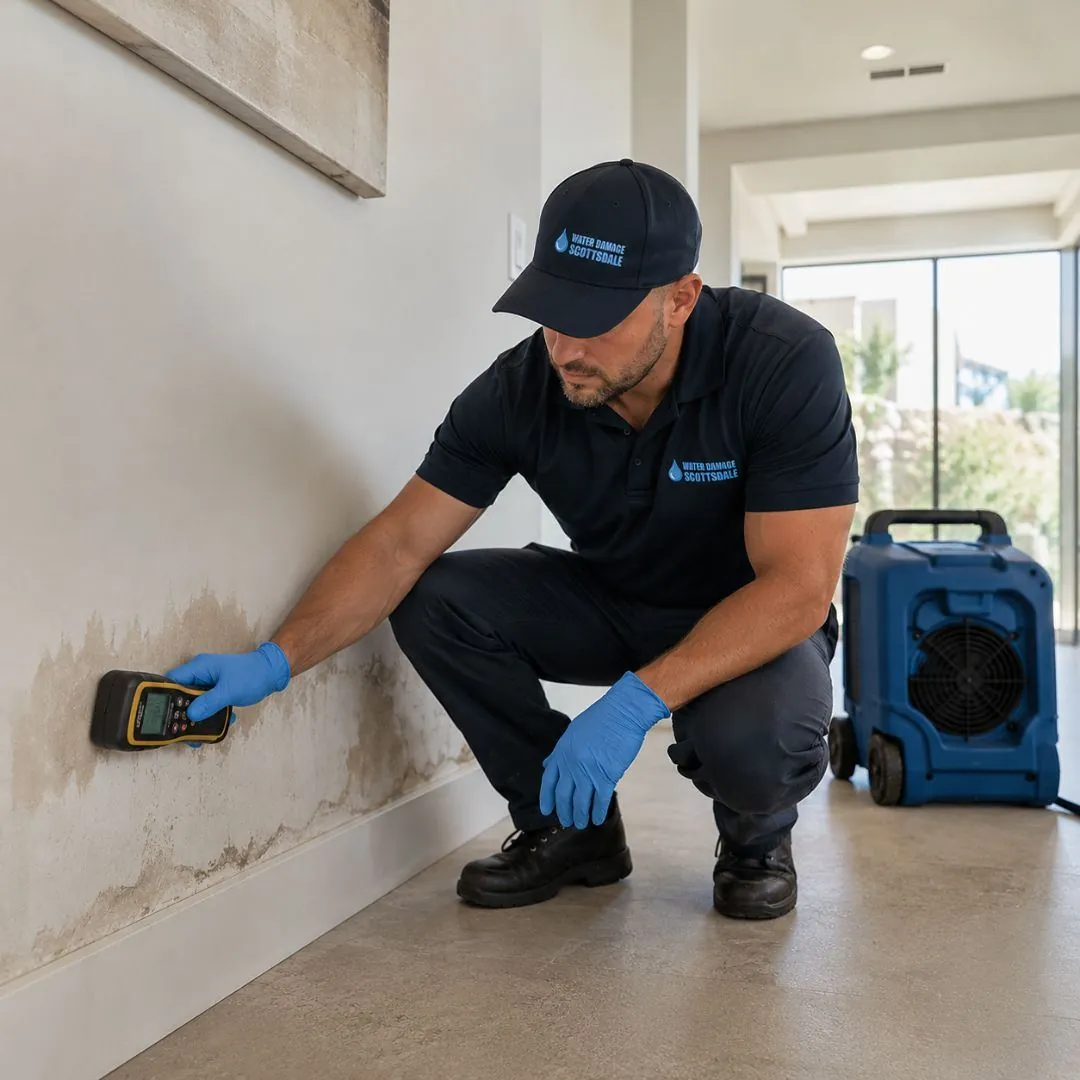
From our experience in Scottsdale: the biggest factor that can drive water damage restoration costs up is how long moisture stays hidden, especially under flooring, inside walls, or around slab-level plumbing. A leak that looks inexpensive on the surface can become a much larger job once drying, damaged materials, or mold remediation are needed.
How much does water damage restoration cost?
Most jobs land in the low thousands, but the spread is large. Angi reports a national average of about $3,868, ranging from roughly $450 to $16,000 depending on the category of water and how far the saturation spread. Those figures cover the mitigation and restoration work, meaning extraction, drying, and cleanup, not a full rebuild with new flooring and repainting, which is billed separately and at a higher rate per square foot.
For a local frame of reference, insured losses tell a similar story. The Insurance Information Institute puts the average water-damage-and-freezing claim at about $13,954, which reflects the larger events that get filed on a policy. The takeaway is that a quick, clean-water job can be a few hundred dollars, while a delayed or contaminated one can run into five figures.
What drives the cost up or down?
Five things move the number more than anything else. Two of them, the category of water and the size of the affected area, are set by the event itself. The other three, how long the water sat, whether mold developed, and how much material has to be replaced, are largely decided by how fast the response starts.
| Cost factor | Effect on the bill |
|---|---|
| Category of water (clean, gray, black) | Higher contamination means higher cost per square foot |
| Size of the affected area | More square footage means more drying and materials |
| How long the moisture sat | The single biggest lever, since delay spreads the damage |
| Mold growth | Adds remediation, often $1,200 to $3,800 more |
| Materials affected | Replacing flooring, drywall, and cabinets costs more than drying |
| Hidden moisture (under floors, in walls, at the slab) | Turns a small-looking leak into a much larger job |
This is why two leaks that look identical on the surface can produce very different bills. The one caught in hours is a drying job, and the one found weeks later is a rebuild.
How the category of water changes the cost
The kind of water is the biggest per-square-foot driver, and the industry grades it with the IICRC S500 standard into three categories. Clean water is the cheapest to handle because drying is the main task, gray water costs more because it carries contaminants and requires sanitizing and some material removal, and black water is the most expensive because it involves sewage or floodwater and triggers biohazard handling, heavy protective equipment, and disposal.
Category 1 clean water, from a supply line or a water heater, typically runs a few dollars per square foot. Category 2 gray water, from an appliance overflow, runs higher. Category 3 black water, from sewage or storm flooding, runs the most, often several times the clean-water rate. One catch worth knowing: clean water that sits too long degrades into a higher category, so a Category 1 job left for days can be billed like a Category 2, which is another reason speed matters.
Why a cheap-looking leak becomes an expensive job
This is where most of the surprise on a bill comes from. A stain or a small puddle is only the visible part, while the water that traveled under the flooring, wicked up inside the walls, or spread across the slab is the part that decides the real cost. In Scottsdale, the dry air makes this worse, because surfaces feel dry while the structure behind them is still wet, so the true scope stays hidden until moisture readings reveal it.
Once that hidden moisture is accounted for, the job grows in three directions at once: more days of drying, more materials to replace, and, if it sat long enough, mold remediation on top. Catching it early with fast water mitigation and proper structural drying is the difference between a modest bill and a major one, which ties directly into whether the water damage can be repaired or has to be rebuilt.
Does insurance cover water damage restoration costs?
Often, yes, minus your deductible. Homeowners insurance generally covers restoration when the cause is sudden and accidental, such as a burst pipe or an appliance overflow, but it usually excludes gradual leaks treated as maintenance, and it excludes flooding, which needs a separate policy. What you pay out of pocket is typically your deductible, as long as the event is covered.
That is why documentation is part of controlling the cost, not just the claim. Photos of the source and the damage, plus the moisture readings and drying logs a restoration company records, are what support the payout. Our guide on whether homeowners insurance covers water damage walks through what is and is not covered, and you can request an estimate for a documented starting point.
How to keep water damage restoration costs down
The cheapest restoration is the one that starts fast. Shut off the water source, get the standing water out, and begin drying immediately, because every day the materials stay wet raises the odds of replacement and mold. Keeping the job in the drying stage rather than letting it become a rebuild is the biggest saving available to you.
After that, document everything for your insurer, and get a professional assessment rather than guessing at the scope, since hidden moisture is exactly what a homeowner cannot see and a moisture meter can. The full arc of extraction, drying, and repair is what we handle under water damage restoration, and starting it quickly is what keeps the number in the low end of the range instead of the high end.
Water damage restoration cost FAQs
How much does water damage restoration cost?
The national average is around $3,860, and Angi reports a range from about $450 for a small clean-water job to $16,000 or more for severe or contaminated damage. It depends on the category of water, the area affected, how long it sat, and whether mold set in. Those figures cover mitigation and restoration, not a full rebuild.
What is the biggest factor in the cost?
How long the moisture sits before it is dried. Hidden water under flooring, in walls, or around slab plumbing keeps spreading, which turns a small drying job into one that also replaces materials and remediates mold. Acting within 24 to 48 hours is the biggest way to keep the cost down.
Does the category of water affect the cost?
Yes. The IICRC S500 standard grades water as Category 1 clean, Category 2 gray, or Category 3 black, and the price per square foot rises with contamination. Clean water is cheapest, while black water from sewage or flooding is the most expensive because it needs biohazard handling.
Does insurance cover the cost?
Usually, when the cause is sudden and accidental like a burst pipe, minus your deductible. It generally does not cover gradual leaks or flooding, and the Insurance Information Institute puts the average water-damage-and-freezing claim around $13,954.
How can you keep the cost down?
Stop the water, start drying fast, and document everything for your insurer. The quicker the moisture is removed, the less likely it is to spread or grow mold, both of which drive the bill up sharply.
Need a real number for your Scottsdale home?
Because hidden moisture decides so much of the cost, an on-site look is the only way to a real figure. We assess, extract, and dry fast to keep the job in the low end of the range. Reach out today.