Water damage guide
Water Heater Leaking? What to Do in Scottsdale
If your water heater is leaking, the first move is to stop the water and cut the power, then figure out where the leak is coming from. A leaking water heater is one of the most common causes of home water damage, and a failed tank can release forty gallons or more into your home. Acting in the first few minutes is what decides whether this is a quick fix or a soaked floor and wall. This guide covers exactly what to do first, why water heaters leak, whether the leak is dangerous, how much damage it can do, and what insurance covers.
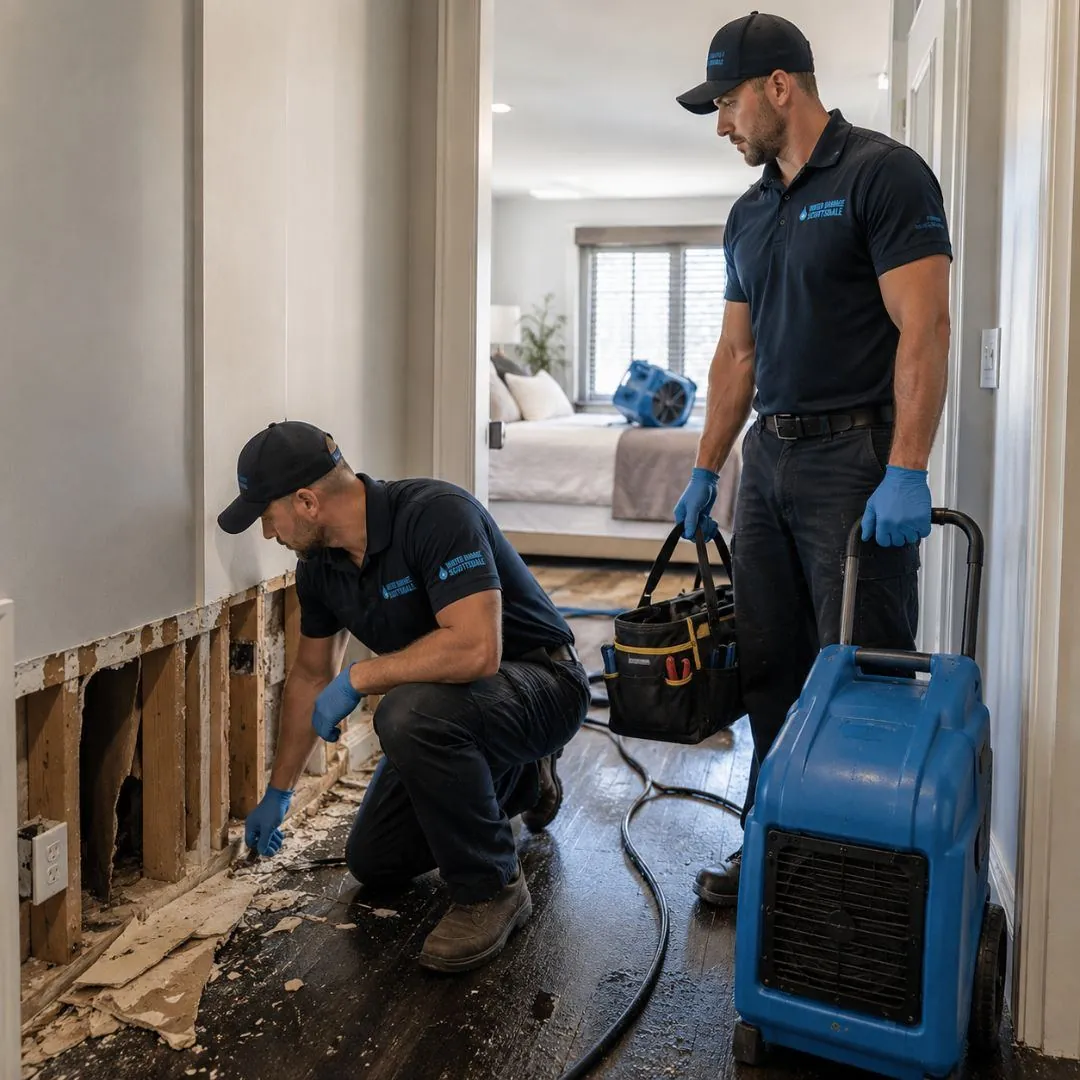
From our experience in Scottsdale: Scottsdale's hard water can accelerate mineral buildup inside a water heater, putting extra stress on the tank and heating components over time. A slow leak is especially easy to miss when the heater sits in a garage, because water can spread along walls or under nearby flooring before the homeowner realizes how much damage has occurred.
What should you do first if your water heater is leaking?
Stop the water and cut the power, in that order, before you do anything else. Turn off the water supply at the shutoff valve on the cold line running into the top of the heater, or shut off your home's main water valve if you cannot reach it. Then cut the heater's power: flip its breaker for an electric unit, or turn the gas control knob to off for a gas unit.
Once it is safe, soak up standing water, move belongings out of the way, and get air moving. If the water reached drywall, baseboards, or flooring, the leak has become a water damage problem, and fast water mitigation is what keeps it from spreading behind the walls. Call a plumber for the heater itself, and a restoration team if the water has traveled.
Why is my water heater leaking?
Most leaks trace back to an aging tank, a relief valve, loose fittings, or sediment. Where the water shows up tells you a lot about which one you are dealing with, and whether it is a repair or a replacement.
| Where the leak is | What it usually means |
|---|---|
| Fittings or pipes at the top | Loose or corroded connections, often repairable |
| Temperature and pressure relief valve | Excess pressure or heat, or a worn valve, needs attention |
| Drain valve at the bottom | Loose or failing drain valve, sometimes replaceable |
| Pooling at the base of the tank | The tank itself is corroded, usually means replacement |
Sediment is the quiet culprit in Scottsdale. Hard water leaves mineral deposits that collect at the bottom of the tank, which makes the heater work harder, corrode faster, and eventually leak. That is why age matters so much: according to Portland's water utility, a tank-style heater typically lasts about 10 years, and the industry range is roughly 8 to 12.
Is a leaking water heater dangerous?
It can be, which is why the power comes off before you start mopping. A leak puts water near electrical connections or a gas burner, and the temperature and pressure relief valve is a safety device that is only supposed to discharge when pressure or heat climbs too high. If that valve is dripping continuously, treat it as urgent rather than a nuisance, because it points to a pressure or overheating problem in the tank.
The slower danger is the water itself. Even a small, steady leak keeps materials wet, and wet materials grow mold within 24 to 48 hours, so a leak you have been ignoring for weeks is often a mold problem by the time it is found. If that has happened, our guide on how to get rid of mold after water damage covers the cleanup.
How much water damage can a leaking water heater cause?
More than people expect, because the tank holds forty to fifty gallons or more and the leak often starts where no one is looking. A sudden tank failure can dump all of it at once, while a slow seep can run for weeks, wicking into subfloor, drywall, and cabinets before anyone notices the first stain.
Garage and closet installations are the ones that hide damage the longest, since water spreads across the slab and under adjoining walls out of sight. Whatever the source, the response is the same: stop the water, then dry the structure fast with proper structural drying before it turns into a bigger repair. The full arc of extraction, drying, and repair is what we handle under water damage restoration.
Does insurance cover a leaking water heater?
Usually the water damage is covered, but the heater itself often is not. Homeowners insurance generally pays for sudden, accidental damage, so when a water heater bursts and floods a room, the resulting damage to floors and walls is typically covered. What insurers usually will not pay for is replacing a heater that failed from age or rust, which they treat as a maintenance issue rather than a sudden accident.
That split, covered damage but not the worn-out appliance, is exactly why documentation and fast action matter. For the full picture on what is and is not covered, see our guide on whether homeowners insurance covers water damage, and you can request an estimate for a documented starting point.
How do you prevent a water heater from leaking?
The best prevention is simple upkeep aimed at the things that actually cause leaks. Flush the tank once a year to clear the sediment that hard water leaves behind, test the temperature and pressure relief valve, and keep the thermostat around 120 degrees, which the Portland water utility notes reduces the risk of scalding and eases strain on the tank.
The other half is watching the calendar. Once a tank passes about ten years, and especially if you see rust-colored water or moisture around the base, plan for replacement rather than waiting for a failure. In hard-water Scottsdale, annual flushing or a water softener slows the mineral buildup that shortens tank life, and catching a slow leak early can keep a plumbing repair from becoming a water damage repair.
Water heater leak FAQs
What should you do first if your water heater is leaking?
Shut off the water supply to the heater, then cut its power: flip the breaker for an electric unit, or turn the gas control to off for a gas unit. Once it is safe, mop up standing water, move belongings clear, and call a plumber and a restoration company if water has spread into walls or flooring.
Why is my water heater leaking?
Common causes are an aging, corroded tank, a leaking temperature and pressure relief valve, loose fittings, and sediment from hard water. Leaks at the top are often fittings and may be repairable, while water at the base of the tank usually means the tank has failed.
Is a leaking water heater dangerous?
It can be, because a leak puts water near electricity or gas, and the relief valve is a safety device that should not discharge routinely. Shut off the power or gas and the water supply before handling it, and treat a continuously dripping relief valve as urgent.
Does homeowners insurance cover a leaking water heater?
Insurance usually covers the water damage from a sudden failure, but generally not the replacement of a heater that failed from age or rust, which is treated as maintenance. The damage to floors and walls is more likely covered than the appliance itself.
How do you prevent a water heater from leaking?
Flush the tank yearly to clear sediment, test the relief valve, keep the thermostat around 120 degrees, and watch the age, since tank heaters typically last about 8 to 12 years. In hard-water areas, flushing or a softener slows the buildup that shortens tank life.
Water heater flooded your Scottsdale home?
Once the water is off, the priority is drying the structure before it spreads and molds. We extract, dry, and restore. Reach out for a fast response and a clear plan.