Water damage guide
Wet Drywall in Scottsdale: Does It Need to Be Replaced or Can It Dry?
Wet drywall is not automatically ruined. Whether it can be dried in place or has to be cut out comes down to three things: how clean the water was, whether the material is still firm, and how fast drying started. Drywall is gypsum wrapped in paper, so it absorbs water readily and the paper facing gives mold something to feed on, which is why the decision has a deadline attached. This guide covers how to tell savable drywall from ruined drywall, how long you have, how the category of water changes the call, and what proper removal and drying look like.
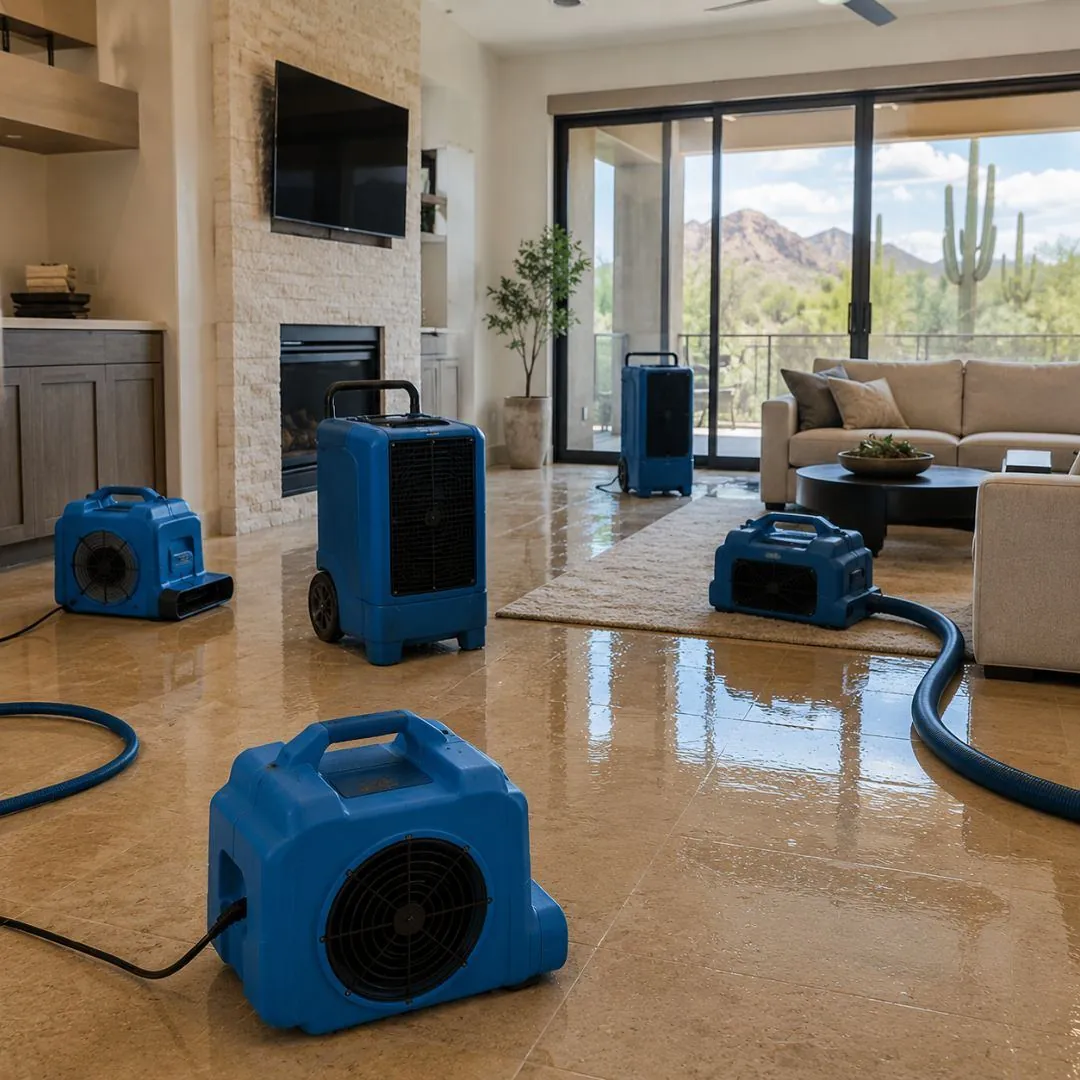
From our experience in Scottsdale: drywall can sometimes be dried in place if the water was clean, the material is still firm, and drying starts quickly. Once the drywall feels soft, swollen, sagging, or the tape seams begin to lift, that usually means the material has already started breaking down and removal may be the safer call.
If drywall gets wet, is it ruined?
Not always, and the difference is usually condition rather than the fact that it got wet. The EPA's guidance is that drywall may be dried in place when there is no obvious swelling and the seams are intact, and that it has to be removed when it is not. In practice, clean-water drywall that is still firm and gets dried fast often stays in the wall, while drywall that swelled or sat for days comes out.
The reason drywall is less forgiving than framing is what it is made of. Gypsum holds water and the paper facing on both sides is an organic material, so it is both slow to dry and easy for mold to colonize. That is why the same leak can leave the studs perfectly salvageable and the drywall in front of them a loss.
How to tell if wet drywall needs to be replaced
The fastest field check is whether the drywall is still firm. Press gently: material that stays solid is a candidate for drying, while anything that gives, feels spongy, or dents under light pressure has already lost integrity. Then look at the shape and the seams, because those tell you what the surface alone will not.
| What you find | What it usually means |
|---|---|
| Firm, only light staining, clean water | Often dried in place, then sealed and repainted |
| Soft or spongy to the touch | Breaking down, remove and replace |
| Swollen, bulging, or sagging | Structurally compromised, replace |
| Tape seams lifting or bubbling | Saturation behind the surface, replace |
| Crumbling or chalky edges | Gypsum has failed, replace |
| Visible mold growth | Cut out, since mold roots into the paper |
| Gray or black water contact | Remove regardless of firmness |
One caution specific to our climate: a surface that feels dry does not mean the wall is dry. Moisture can sit in the cavity behind firm-looking drywall, which is why a moisture meter, not a hand, makes the final call. For the mold side of that question, see our guide on mold behind drywall.
How long do you have before wet drywall is a problem?
Roughly 24 to 48 hours. The EPA advises drying water-damaged materials within 24 to 48 hours to keep mold from taking hold, and drywall sits at the vulnerable end of that rule because of its paper facing. Inside that window, drying is realistic. Past it, the odds shift toward removal.
The trap is that drywall does not look damaged right away. A wall can appear fine on day one and show swelling, staining, or a musty smell a week later, once the moisture in the cavity has done its work. That is why the response clock starts when the water arrives, not when the damage becomes visible, and why fast water mitigation saves more drywall than any drying technique applied later.
Does the type of water change whether drywall can be saved?
Yes, and it can override everything else. Clean water from a supply line or a water heater gives drywall its best chance, because the only problem is moisture. Gray water from an appliance overflow carries contaminants, and black water from sewage or storm flooding carries pathogens, and both soak into porous gypsum and paper where they cannot be cleaned out.
So drywall touched by gray or black water is removed even when it still feels firm. There is also a time factor worth knowing: clean water that sits long enough degrades into a higher category, so a Category 1 leak left for days can end up handled like a Category 2. Speed protects the material and the category at the same time.
How wet drywall is removed and dried properly
When drywall has to come out, the cut goes above the damage line to reach dry, sound material, and any wet insulation behind it comes out too, since insulation mats down and will not dry inside a wall. What is left, the framing and the cavity, is then dried with air movers and dehumidifiers and confirmed with moisture readings before anything is closed up.
That verification step is the one homeowners skip, and it is why patched walls sometimes stain or smell weeks later. Hanging new drywall over a cavity that is still damp just hides the problem, which is the same reason the EPA warns against painting over a moldy surface. Getting the cavity genuinely dry is the core of proper structural drying, and it decides whether the repair holds.
Should you dry wet drywall yourself or call a professional?
A small, clean-water spill caught immediately, such as a splash on a baseboard, can often be handled with towels and a fan. Anything larger is where a professional earns the cost, because the visible wet patch is usually smaller than the actual saturation, and household fans cannot dry a wall cavity.
Call for help when water reached more than a small area, when it came from a contaminated source, when the drywall is already soft or sagging, or when you cannot tell whether the cavity behind it is dry. The full arc of extraction, drying, and rebuilding is what we handle under water damage restoration, and if you want to know what it costs, our guide on water damage restoration cost breaks it down. You can also request an estimate for a documented starting point.
Wet drywall FAQs
If drywall gets wet, is it ruined?
Not always. Drywall soaked by clean water that is still firm and dried quickly can often be saved. The EPA notes it may be dried in place when there is no swelling and the seams are intact. Once it swells, sags, crumbles, or grows mold, it has to be replaced.
How can you tell if wet drywall needs replacing?
Check whether it is still firm. Drywall that feels soft or spongy, looks swollen or sagging, crumbles at the edges, or has lifting tape seams has started breaking down and should be removed. Firm drywall with only staining is usually a candidate for drying.
How long before wet drywall is a problem?
About 24 to 48 hours. The EPA advises drying water-damaged materials within that window to prevent mold, and drywall is especially vulnerable because its paper facing feeds mold. After that, the odds shift toward replacement.
Does the type of water matter?
Yes. Clean water gives drywall the best chance. Gray water from an appliance and black water from sewage or flooding carry contaminants that soak into the gypsum and paper, so that drywall is removed regardless of how firm it looks.
How much drywall has to be cut out?
Enough to reach dry, sound material, usually above the visible damage line, plus any wet insulation behind it. The cavity then has to be dried and verified with moisture readings before new drywall goes up.
Wet drywall in your Scottsdale home?
Whether it dries or gets replaced is decided in the first day or two. We check the cavity, dry what can be saved, and remove what cannot. Reach out for a fast response.